
REIT leaders say Q4 2025 leasing outperformed averages from the last five quarters
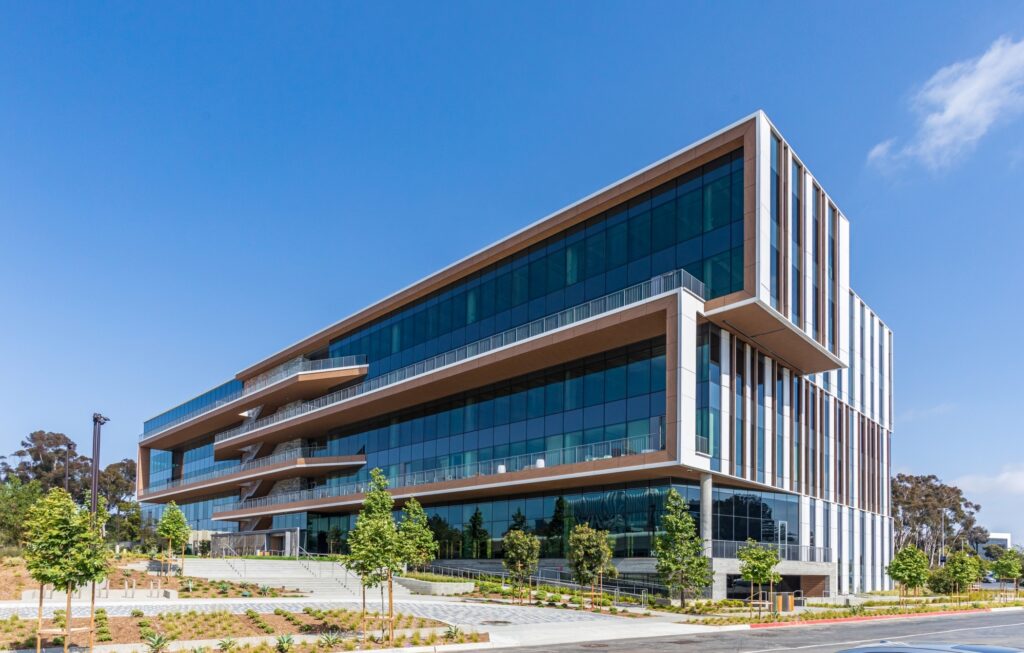
Alexandria Real Estate Equities pointed to early signs of a nationwide turnaround in biotech real estate after securing 1.2 million square feet of leases during the fourth quarter, nearly twice the REIT’s average leasing volume over the previous five quarters.
As the largest owner of life science laboratory and office space in the U.S., controlling more than 50 million square feet in markets such as Boston, San Francisco, and San Diego, the company delivered its strongest leasing performance of 2025. Leasing activity exceeded the average of the past eight quarters by 10%. Company executives reaffirmed plans to divest properties and land that fall outside its core strategy of developing modern, large-scale multitenant campuses.
Based in Pasadena, California, the REIT disclosed $1.5 billion in property sales across 26 deals in the fourth quarter, continuing its shift away from standalone assets and toward major campus developments in key life science hubs.
Alexandria anticipates portfolio occupancy to remain near 90% in 2026. While absorption may soften in the first quarter due to lease expirations, company leaders expect leasing activity to regain momentum later in the year as vacant spaces are re-leased and new developments become operational.
“Our team is continuing to operate through a difficult macro and regulatory environment,” Alexandria Chief Financial Officer Marc Binda said during a quarterly earnings call on Tuesday.
Founder and Executive Chairman Joel Marcus noted that biotech space demand in 2026 will depend largely on venture capital availability for early- and mid-stage companies, which has slowed over the past year, along with activity in public equity markets.
Marcus also highlighted uncertainty around potential delays in drug approvals caused by leadership transitions at federal healthcare and drug agencies, although approval volumes generally remained stable throughout 2025.
Global pharma firms drive leasing growth
Company officials said an ongoing trend continued in 2025, with 82% of Alexandria’s leasing volume coming from existing tenants. This group includes several global pharmaceutical companies that are expanding their space requirements, particularly for manufacturing-related uses.
While Alexandria has previously indicated that pharmaceutical manufacturing represents a small portion of its current portfolio — which is primarily focused on laboratory and office space — recent announcements from major drugmakers signal a shift. Several firms have unveiled plans for new U.S.-based manufacturing facilities aimed at reducing reliance on imports and avoiding tariffs by boosting domestic production.
These commitments total more than $300 billion in planned investment over the next decade. According to a recent Newmark report, biotech-related manufacturing investments in the U.S. over the past two years reached nearly $50 billion, representing an 80% increase compared with all announced capital spending from 2020 through 2023.
In 2025, almost every U.S. region saw at least one major life science manufacturing project announced, with the Northeast and Southern states leading the activity. “This wave of investment represents a meaningful positive signal for the broader life science industry, which has faced considerable challenges in recent years,” Newmark analysts said.
Industry brokers noted that biotech real estate demand weakened after the pandemic as companies restructured research and development strategies. Smaller and mid-sized firms, in particular, reduced space or paused expansion plans, pushing vacancy levels higher across several major markets.
Although a slowdown in new biotech construction has helped vacancy rates ease in recent months, availability remains above pre-pandemic norms in the country’s largest life science markets.
Source: Original reporting by Lou Hirsh, CoStar News.