
Multifamily portfolio refinancing set to enter CMBS market through major lending partners
A group of lenders is marketing a $629 million commercial mortgage-backed securities (CMBS) transaction secured by 11 multifamily properties owned by Bridge Investment Group, marking a notable shift for a company more commonly known as a lender than a borrower.
Bridge operates a substantial lending platform through its debt strategies division, originating apartment loans across the United States and packaging them into securities for investors. The firm has completed 17 securitized transactions to date, making it one of the most active participants in the multifamily CMBS sector.
In this latest deal, however, Bridge is utilizing the CMBS market to refinance its own apartment portfolio. The transaction also offers insight into how Apollo Global Management may leverage the company following its acquisition of Bridge last year.
The refinancing represents one of the first significant capital markets transactions since Apollo completed its $1.5 billion acquisition of the Salt Lake City-based investment firm. Industry observers view the move as a signal that the combined organization could increasingly rely on structured debt financing to support its residential real estate holdings.
According to Fitch Ratings, the transaction, known as Bridge Commercial Mortgage Trust 2026-MF, is expected to close on June 18.
Bridge did not provide comments regarding the offering.
The financing is being arranged by Wells Fargo Bank, JPMorgan Chase, Morgan Stanley Bank, and Atlas SP Commercial Mortgage, which are jointly originating the loan. Proceeds from the transaction will be used to refinance approximately $469.4 million in existing debt while also returning around $152.8 million in equity to Bridge.
Founded in 2009, Bridge has expanded into one of the nation’s larger real estate investment managers. As of December, the company oversaw approximately $121 billion in assets and maintained a portfolio exceeding 90,000 residential units, including conventional apartments, workforce housing, affordable housing communities, and senior living properties.
Sun Belt Portfolio
The refinancing package includes 11 garden-style apartment communities totaling 4,956 units across seven major Sun Belt markets. The properties are located in Dallas, Texas; Atlanta, Georgia; Las Vegas, Nevada; Phoenix, Arizona; San Diego, California; Orlando, Florida; and Tampa, Florida.
Bridge acquired the assets between 2018 and 2021 for more than $835.7 million. Since then, the company has invested nearly $94.9 million in upgrades and renovations, averaging approximately $19,147 per unit. The properties were acquired through Bridge’s fourth multifamily investment fund.
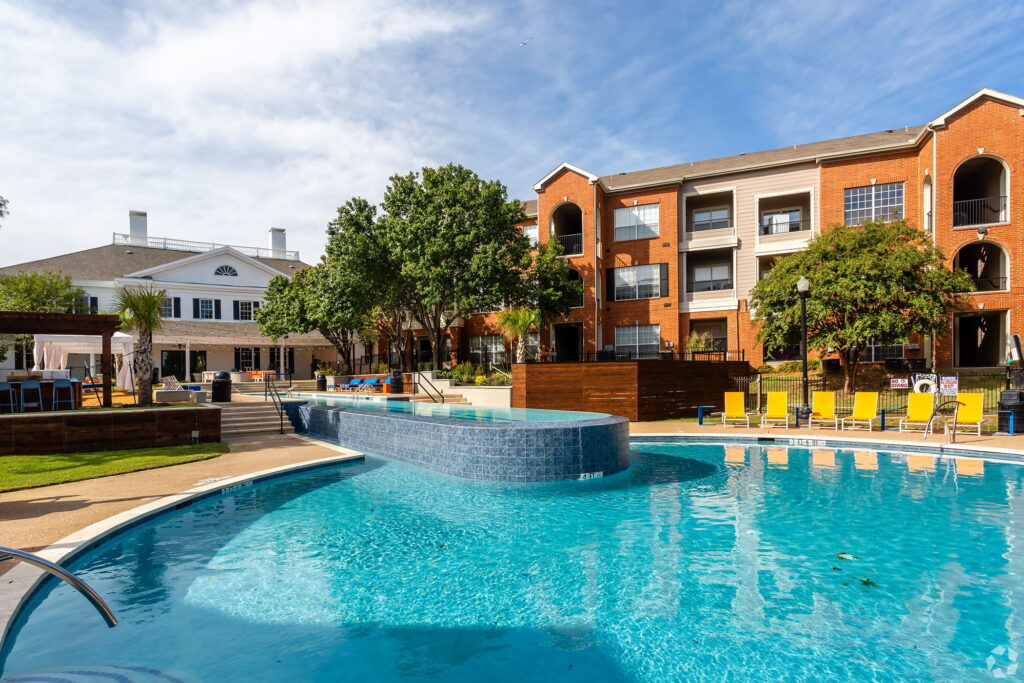
The largest asset in the portfolio is the 1,183-unit Chapel Hill Apartments in Lewisville, Texas, which represents roughly 25% of the total loan allocation.
Over the 12 months ending in April, the portfolio generated approximately $52.6 million in net operating income. Occupancy stood at 89.1% in May, compared with a peak of 95.3% recorded in 2021. Average monthly rent across the portfolio was reported at $1,459 per unit.
The Sun Belt apartment sector has faced increasing pressure in recent years as a wave of new construction delivered between 2023 and 2025 outpaced demand growth. The influx of new inventory reduced landlords’ pricing power and contributed to softer occupancy levels across many markets.
However, several of the markets represented in the Bridge portfolio have recently experienced a slowdown in new apartment deliveries. Construction activity also declined significantly during the first quarter, including a reduction of more than 6,700 units under development in the Dallas area.
If the trend continues, the reduction in new supply could help absorb excess inventory across oversupplied Sun Belt markets, stabilize vacancy rates, and support stronger rent growth beginning in early 2027.
Source: Original reporting by Mark Heschmeyer, CoStar News.