
Avison Young’s James Nelson Shares Insights on Stabilizing Office Values
U.S. commercial real estate investment sales experienced a strong resurgence in 2025, driven by improved financing conditions and renewed confidence in property fundamentals. The office sector emerged as an unexpected leader, recording the largest year-over-year growth in transaction volume among major asset classes, according to CoStar data.
One of the key contributors to this momentum was James Nelson, principal and head of U.S. investment sales at Avison Young. Nelson recently joined Phil Mobley, CoStar’s national director of office analytics, to discuss the factors behind investors’ renewed interest in office assets and the evolving dynamics of the market. The conversation below has been edited for clarity and brevity.
Both CoStar and Avison Young reported that office investment sales volume rose by more than 20% year over year in 2025. Is there an aspect of this rebound that may be overlooked?
While the increase in transaction volume is certainly encouraging, the deeper story becomes clear when analyzing the types of assets being traded. In 2023 and 2024, a significant share of office transactions involved properties purchased for conversion into alternative uses. However, in 2025, there was a noticeable shift, with more investors acquiring office buildings to maintain them as office assets, often pursuing value-add or even core investment strategies. These types of deals had largely been absent in prior years.
Can you elaborate on conversion-related transactions and their contribution to overall volume?
Conversion activity played a substantial role over the past few years. In New York City, office-to-residential conversions accounted for as much as 25% of total office sales at one point. However, that share has started to decline as leasing conditions improve and the number of largely vacant buildings suitable for conversion decreases.
In terms of office inventory being converted to residential use, Northern Virginia leads with approximately 9% of stock undergoing conversion, followed by Washington, D.C., at about 5%. Manhattan and Dallas each fall within the 3% to 4% range.
The return of institutional investors to the office market was one of the defining themes of 2025. What factors encouraged their comeback, and do you anticipate even stronger participation moving forward?
Two primary factors drove this return. First, investors gained greater clarity about which office assets remain functionally competitive versus those better suited for alternative uses. Second, institutional capital reentered the market as confidence grew that property valuations had bottomed, creating compelling entry points at attractive pricing levels.
In addition, lender-driven sales contributed to increased transaction activity, even in markets where vacancy rates continue to rise.
Are there specific segments of the office market where the bid-ask gap remains too wide, or where buyer interest is still limited?
Greater capital allocation toward core office assets would be beneficial. While there is strong appetite for value-add opportunities—particularly involving upgrades from Class B to Class A properties—the market still lacks sufficient depth of buyers prepared to acquire stabilized assets at exit. An increase in foreign investment could help bridge that gap.
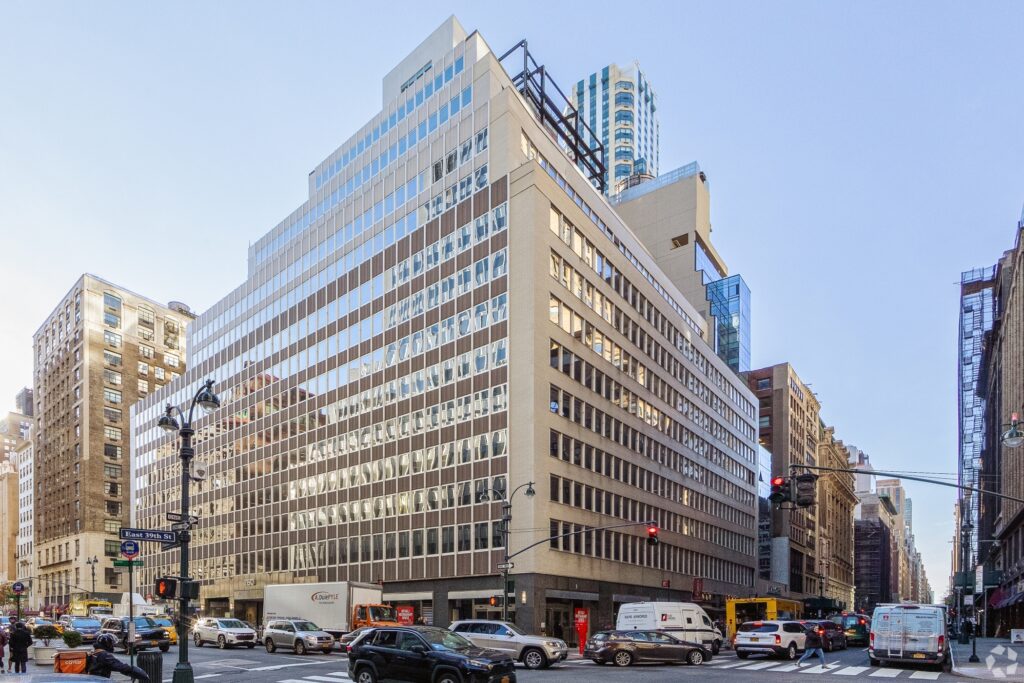
Encouragingly, Norges Bank’s investment in 1177 Avenue of the Americas last fall signaled renewed international confidence in prime U.S. office properties.
Looking ahead, what are the primary upside and downside risks that could influence whether 2026 sees even greater liquidity in the office sector?
The key upside factor would be continued strengthening in leasing fundamentals. On the downside, if leasing momentum stalls and tenant concessions remain elevated, underwriting office transactions could become more challenging, potentially limiting further gains in liquidity.
Source: Original reporting by Phil Mobley, CoStar News.