
Steady hiring remains a key driver of office demand as hybrid work becomes the norm
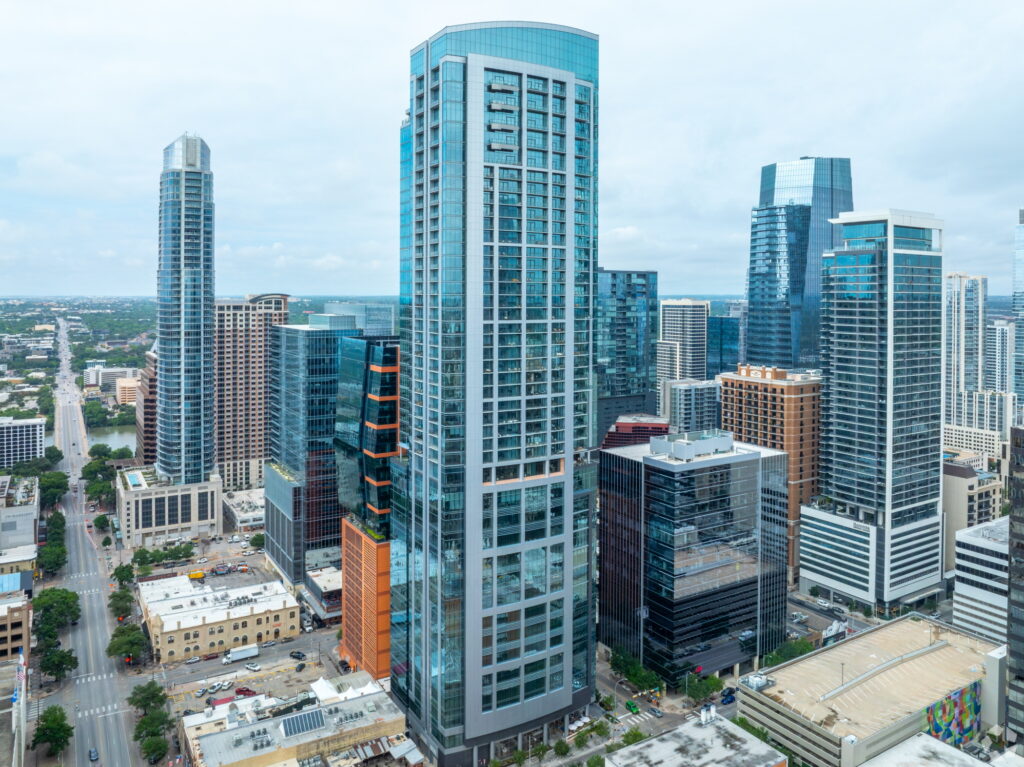
As hybrid work arrangements become firmly established, employment growth in office-based industries is playing an increasingly important role in Austin’s office market recovery. With companies maintaining stable workplace strategies, expanding their workforce has become the primary source of new office demand.
According to data from the Bureau of Labor Statistics, businesses in office-oriented industries, including professional and business services as well as financial activities, added approximately 4,700 jobs between April 2025 and March 2026. As organizations continue hiring, the need for additional office space has gradually increased.
This employment growth helped generate approximately 2.5 million square feet of positive net office absorption between the second quarter of 2025 and the first quarter of 2026. Professional services led the gains by creating around 4,100 new jobs, while financial activities added another 2,700 positions. However, some of that progress was offset by losses in the technology sector, where employment declined by roughly 2,100 jobs.
Although business expansions and corporate relocations have continued to create new employment opportunities, the pace remains significantly slower than the rapid growth experienced before and immediately following the pandemic. Over the past decade, office-using industries expanded at an average annual rate exceeding 5%, compared with roughly 1% growth over the past year.
Even with slower hiring, improving occupancy has gradually reduced the oversupply of premium office space across the Austin metropolitan area. Among four- and five-star office buildings completed in 2020 or later, vacancy has fallen to approximately 35%, down from 38% a year earlier. This improvement was supported by nearly 1.2 million square feet of positive absorption, as tenants increasingly favor modern buildings with high-end amenities and desirable locations.
Older premium office buildings have also shown signs of recovery. Vacancy in four- and five-star properties completed before 2020 declined to 22.5%, improving from 26.5% one year earlier after recording approximately 900,000 square feet of absorption. While these figures indicate meaningful progress, vacancy levels remain historically elevated, suggesting the market still has considerable ground to cover before returning to more balanced conditions.
One major factor influencing occupancy was the early 2026 acquisition of Highpoint, a 1.1 million-square-foot office campus located in Northwest Austin. SB Energy purchased the property and is expected to convert it into a research and development center focused on semiconductor chip design and testing.
Several expanding businesses have also contributed to stronger leasing activity. Fintech company Togetherwork, which relocated its headquarters from Atlanta to Austin, signed a 20,000-square-foot sublease at 1221 South Congress. Meanwhile, startup WebAI has continued expanding following recent fundraising success, increasing its presence at 515 Congress in downtown Austin to a total of approximately 40,000 square feet.
Austin’s combination of a highly skilled workforce and relatively competitive business costs continues to attract companies considering expansion or relocation. As a result, the city remains one of the nation’s strongest office markets for net absorption. When medical office buildings and owner-occupied properties are included, the Austin metropolitan area ranks fourth among the 50 largest office markets in the United States.
Source: Original reporting by Israel Linares, CoStar News.