
Value cut nearly in half in sale to Leonard Green & Partners
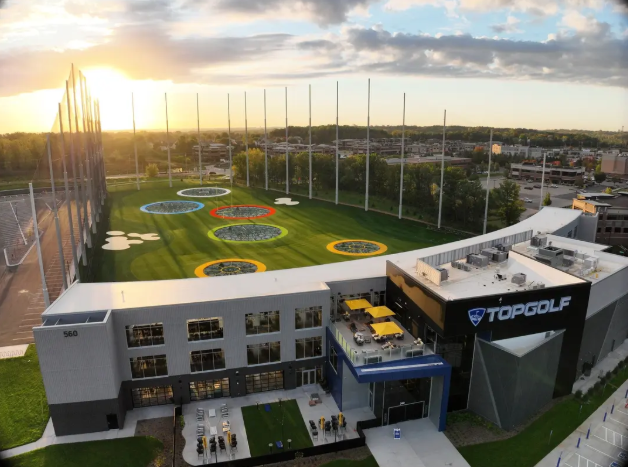
Image Source: Topgolf opened its 111th global venue, a three-level complex in Woodbury, Minnesota, in October. (Topgolf)
Topgolf Callaway Refocuses on Core Equipment and Apparel Business
One of the world’s most recognizable golf brands is shifting direction, selling a major portion of its driving range division to return its focus to equipment and apparel — the products that built the company’s reputation long before tech-enabled golf experiences became mainstream.
The Carlsbad, California–based Topgolf Callaway Brands announced that it will sell a 60% stake in its Topgolf unit to Leonard Green & Partners in a $1.1 billion deal, valuing the entertainment chain at roughly half of its 2021 valuation. Topgolf currently operates 111 venues worldwide.
New Corporate Identity and Reinvestment Plans
Once the transaction closes in the first quarter, Topgolf Callaway will rebrand as Callaway Golf Co.
The company expects to generate $700 million from the deal, which it plans to reinvest into its Odyssey putter line, Ogio accessories, and its TravisMathew apparel brand, according to President and CEO Chip Brewer.
Brewer emphasized that the sale reflects confidence in Topgolf’s long-term outlook while allowing Callaway to step back from daily operations. He described Leonard Green as a partner that can help accelerate the venue-based business’s growth.
Leonard Green’s Track Record
Los Angeles–based Leonard Green & Partners, which manages about $75 billion in assets, has a history of acquiring well-known consumer brands.
The firm previously bought The Container Store in 2007 (taken public in 2017) and also acquired Joann the same year — both companies later filed for Chapter 11 bankruptcy in 2024.
Topgolf’s Real Estate Footprint
According to CoStar analytics, Topgolf occupies 5.2 million square feet of commercial space, with suburban sites accounting for 70% of its footprint.
Venue sizes vary significantly, from traditional 33,000-square-foot multi-level facilities to smaller 2,000-square-foot Swing Suites in hotels and mixed-use developments.
A Tech-Driven Evolution
Topgolf began in the U.K. in the early 2000s as a tech-enhanced driving range concept aimed at making golf more social and interactive.
Callaway initially invested in the business in 2006 before acquiring the remaining stake in a $2 billion deal in 2021, betting that tech-forward venues would help the brand reach younger, more casual players.
By that time, Topgolf had grown to more than 70 locations and become one of the most recognizable leisure brands in the sport.
However, as casual golfer participation cooled, revenues slowed and Callaway’s stock price has dropped about 65% since the merger.
In 2024, the company announced plans to split into two businesses and explore strategic options for Topgolf.
Recent Performance and Expansion Pipeline
Topgolf posted strong third-quarter results ending Sept. 30, with revenue rising to $472 million, up $19 million year over year. The increase was driven by three new venue openings and a modest 1% lift in same-venue sales—outperforming Wall Street expectations due to improved traffic and lower prices.
Despite this bump, the company expects full-year 2025 same-venue sales to decline slightly compared to last year.
Texas remains the chain’s largest market with 15 locations, representing 14% of its real estate footprint. Topgolf also has sites in Asia, the Middle East, Canada, and the U.K.
The company continues to expand, recently opening its 111th venue in Woodbury, Minnesota — a three-level facility with 102 climate-controlled bays and proprietary ball-tracking technology designed to enhance gameplay and entertainment.
Construction is underway on a new two-level Topgolf location in Monona, Wisconsin, slated to open in fall 2026.
Author Credit: Originally reported by Brannon Boswell, CoStar News