
Rising demand for data centers is increasing project costs, straining supply chains, and prompting new development restrictions across the United States.
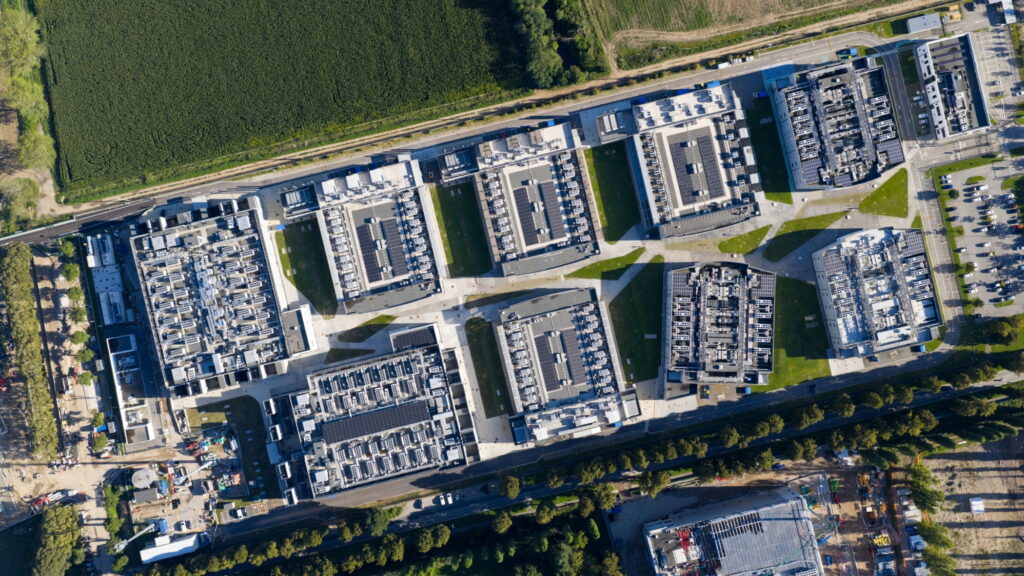
The rapid expansion of data centers across the United States is significantly increasing construction costs while creating new challenges for developers, including equipment shortages, labor constraints, and stricter local regulations.
According to industry analysts, the surge in data center projects is putting additional pressure on construction supply chains, particularly for critical electrical infrastructure needed to power these energy-intensive facilities. Combined with higher material prices, import tariffs, and rising energy costs, these factors are expected to keep development expenses elevated throughout the remainder of the decade.
Research from Oxford Economics, based on government and industry data, shows overall U.S. construction costs increased by approximately 4% annually through May. However, cities that have become major data center markets—including Baltimore, Dallas, and Pittsburgh—have experienced cost increases of nearly 7% so far this year.
Mario Iacobacci, Head of North America Construction and Infrastructure Markets at Oxford Economics, noted that construction costs in leading data center markets are rising at nearly double the national average due to growing competition for skilled workers and essential building materials.
Supply chain disruptions that began during the COVID-19 pandemic continue to affect the availability of key electrical components. Energy research firm Wood Mackenzie reported that power transformer prices have climbed by 77% since 2019, with increasing demand from data center developments further tightening supply.
Wood Mackenzie projects that U.S. data center capacity will expand dramatically from around 24 gigawatts today to nearly 110 gigawatts by 2030. For comparison, one gigawatt of electricity can supply power to roughly one million American homes.
Industry experts warn that shortages of electrical equipment and longer delivery times may delay project completion schedules while also making it more difficult for utility providers to complete necessary power grid upgrades.
More States Consider Data Center Development Restrictions
Growing concerns over electricity consumption, environmental impacts, and land use are leading more state and local governments to reconsider how quickly data centers should expand.
According to the National Conference of State Legislatures, at least 15 U.S. states are currently reviewing proposals that would either temporarily pause or restrict new data center developments. Meanwhile, investment firm Interconnected Capital reported that as of June 30, at least 155 cities, counties, and municipalities across the country were evaluating development moratoriums.
The number of proposed restrictions continues to grow as local communities respond to concerns about energy demand, environmental sustainability, infrastructure capacity, and public safety.
Recent proposals or approvals for new limitations have emerged in several areas, including Madison and Dane County in Wisconsin, St. Joseph in Tennessee, Independence in Missouri, multiple counties in Iowa, Cache County in Utah, and Clark County, Nevada.
In Montana, Missoula County commissioners unanimously voted on July 8 to temporarily halt new data center developments and expansion projects for up to one year while officials review and update local regulations. The temporary pause applies only to the county and does not include the City of Missoula.
Western states such as Montana, Utah, and Wyoming have attracted increasing attention from technology companies because of their large areas of available land suitable for future data center campuses. Local officials say additional planning is necessary to fully understand the long-term environmental and infrastructure impacts before approving large-scale developments.
Labor Shortages Become a Growing Challenge
The unprecedented pace of data center construction is also placing significant pressure on the construction workforce.
A recent midyear report from commercial real estate firm JLL found that developers are facing increasing competition for electricians, heavy equipment operators, HVAC technicians, and other highly specialized construction professionals required for data center projects.
Analysts noted that while construction project demand continues to rise rapidly, hiring growth has slowed considerably. Annual construction employment growth currently stands at only 0.6%, well below the long-term historical average of 2.7%.
JLL estimates that approximately 61% of U.S. metropolitan areas already face construction labor shortages, and that figure is expected to increase to 72% by 2027 as more large-scale projects move into development.
Andrew Volz, an analyst at JLL, said developers planning projects for 2027 and 2028 are likely to face even tighter labor markets than those seen today. He added that expanding power infrastructure projects—essential for supporting new data centers—are competing for the same skilled workforce, further increasing labor demand.
According to JLL, the most labor-constrained construction markets currently include Phoenix, Cleveland, Salt Lake City, Boston, and Omaha, where project activity is significantly outpacing the availability of skilled workers.
Source: Original reporting by Lou Hirsh, CoStar News.